Industry Changes That Affect You
The vape industry continues to change quickly at both the federal and state level. These changes affect where products can be sold, how they can be shipped, what taxes apply, and which products may remain on the market.
We created this page to help customers understand why certain shipping options, product availability, taxes, or state restrictions may apply to their orders.
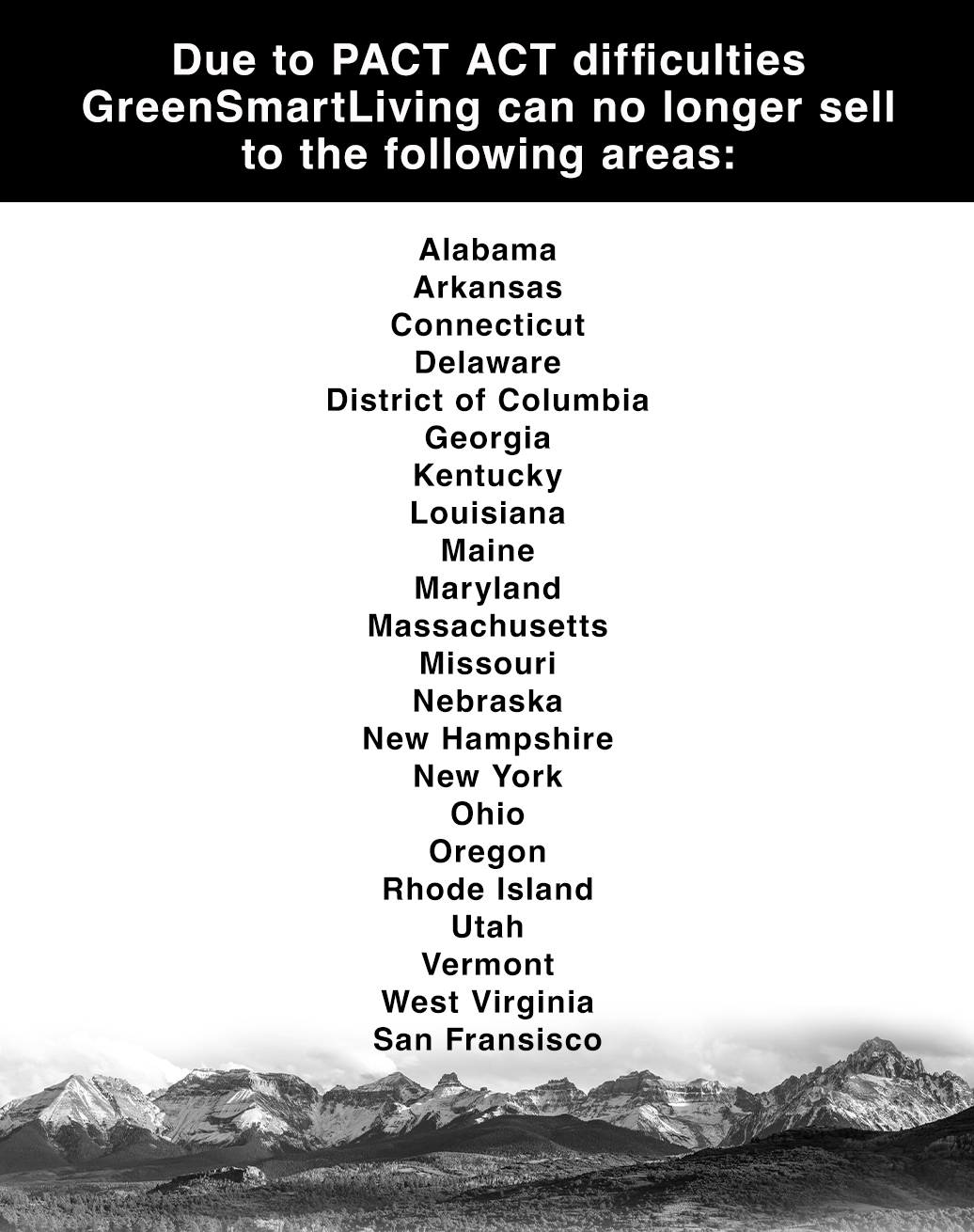
States and Areas We May Not Service
Due to federal shipping rules, state licensing requirements, excise tax obligations, state product directories, flavor restrictions, and online sales limitations, we are unable to ship to certain states or local jurisdictions.
Availability may change as laws are updated. If your state is not available at checkout, it may be because of one or more of the following:
- State or local online sales restrictions
- State licensing requirements
- State excise tax registration/reporting requirements
- State product directory or registry requirements
- Flavor restrictions
- Carrier limitations
- Adult-signature shipping requirements
Federal Shipping Rules and Adult Signature Requirements
The PACT Act now applies to electronic nicotine delivery systems, including e-cigarettes, vape products, e-liquids, components, and accessories. Sellers must comply with registration, age verification, tax, shipping, and reporting requirements.
USPS generally cannot ship ENDS products directly to consumers, and major private carriers have also imposed significant restrictions on vape shipments. As a result, we may use specialized carriers where available, and all shipments require an adult signature at delivery.
State Vape Laws, Flavor Restrictions, and Product Registries
State laws vary widely. Some states restrict online sales, some restrict flavors, some require special retail or wholesale licensing, and a growing number require products to be listed on a state-approved product directory before they can be sold.
These state registry laws are becoming one of the biggest changes in the industry. In many states, a product may need to have FDA authorization, be under active FDA review, or have another qualifying regulatory status before it can be sold in that state. Utah, for example, has implemented an e-cigarette registry law with directory requirements beginning in 2025.
Flavor Regulations
There is no single nationwide “flavor ban.” FDA’s 2020 enforcement policy focused primarily on certain flavored cartridge-based products, but federal and state rules have continued to evolve.
As of today, the FDA has authorized a limited number of ENDS products through the PMTA process, including tobacco, menthol, and, for the first time in May 2026, certain non-tobacco flavored products from Glas. However, FDA authorization is product-specific. A flavor being authorized for one company does not mean that all similar flavored vape products are legal to sell.
Several states and local governments also maintain their own flavor restrictions, which may be stricter than federal policy.
Excise Taxes
Many states impose excise taxes on vapor products. These taxes vary by state and may be based on wholesale price, retail price, e-liquid volume (milliliters), cartridge count, or other formulas.
Because tax rates and reporting rules change frequently, taxes may vary depending on where an order is shipped.
PMTA and FDA Review
A Premarket Tobacco Product Application, or PMTA, is the FDA pathway for legally marketing a new tobacco product in the United States. In general, a new tobacco product must receive a written marketing order from the FDA before it can be legally marketed.
The PMTA process is expensive, technical, and time-consuming. It can include product chemistry, toxicology, manufacturing information, youth-access considerations, abuse-liability analysis, and evidence on whether the product is appropriate for protecting public health.
GreenSmartLiving continues to monitor FDA requirements, state product registry laws, and ongoing regulatory changes to remain compliant while serving adult customers.
Our Commitment
We support responsible regulation that keeps vapor products away from minors while preserving access for adult consumers looking for alternatives to combustible cigarettes.
Because laws change often, product availability, shipping options, taxes, and service areas may change without notice.